

🇭🇹 New strategy?
The United States proposes a new force in Haiti and sends ships to the coast of Venezuela, Zambada pleads guilty, young hitman convicted in Colombia, and more.

Hello,
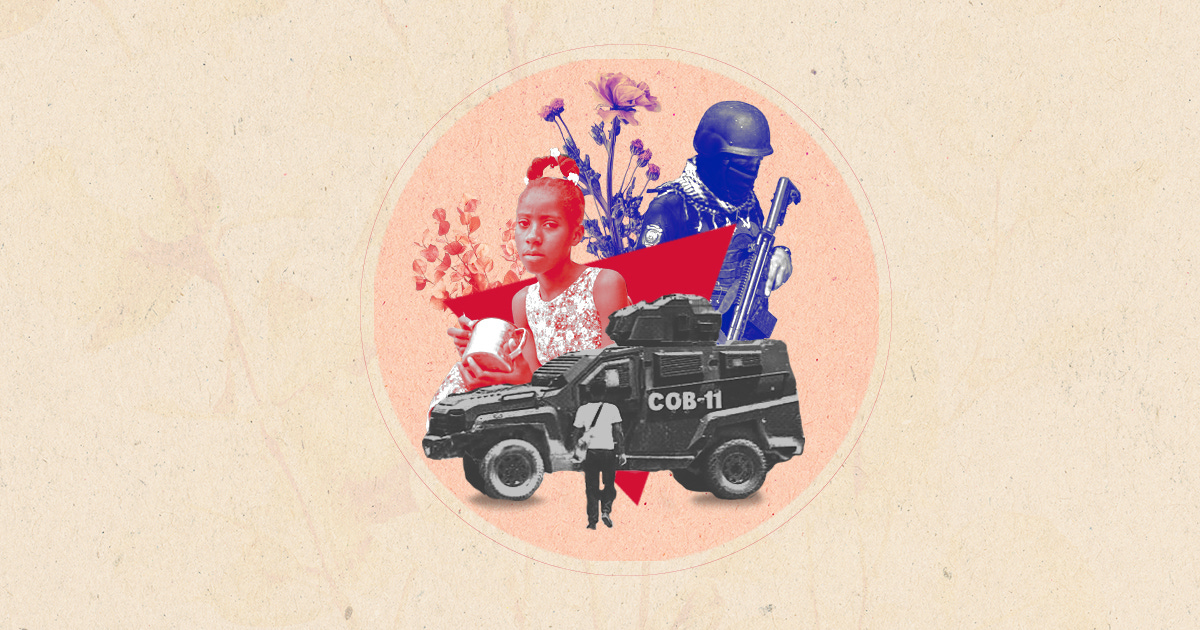
The clock seems to be ticking for the international mission, led by Kenya, which is attempting, without much success, to bring some peace to Haiti. The United States, with the support of Panama, is proposing to replace it with a more aggressive force, with more police officers and a mandate that would allow it to act independently of the national police, AP reported.
The proposal, which will be negotiated in the coming days, would be funded by the United Nations, in line with what the organisation's secretary-general, António Guterres, had already proposed in February.
But experts have questioned whether the new plan will bring about real change. Romain Le Cour Grandmaison, head of the Haiti Observatory of the Global Initiative Against Transnational Organized Crime, said that although the resolution incorporates positive aspects, it leaves many questions unresolved.
In particular, he questions the lack of mention of the need to improve coordination with local authorities, the fight against the political and economic networks that allow gangs to operate, and the need to strengthen the national justice system, reported Jacqueline Charles of the Miami Herald.
There's more.
On Thursday, as the United Nations Security Council denounced the impact of violence in Haiti, the poorest country in the Western Hemisphere, Jimmy Chérizier, alias “Barbecue,” leader of the main gang alliance that controls 90% of the capital, Port-au-Prince, announced that he would allow 1.3 million displaced people to return to their homes, reported EFE news agency.
But when they arrived, they found “looted buildings, churches riddled with bullet holes, without roofs or windows, and streets littered with debris,” according to reports in the Miami Herald.
The situation in Haiti is beyond critical. UNICEF experts reported that in the first three months of 2025, there was a 700% increase in the recruitment of children compared to the same period last year.
Also this week, the United Nations Food and Agriculture Organisation said that more than half of Haiti's population does not have access to sufficient food.

CAPSULES
🇺🇸 Warships. The dispatch of US naval ships to the coast of Venezuela is raising more questions than answers, particularly about their purpose and potential consequences, reported the Latin American Daily Briefing on Friday. The Trump administration's official version is that the deployment is part of its anti-drug strategy in the region, reported AP. It is part of a series of announcements that the United States has been making in recent months, including the designation of criminal organisations as “terrorists” and the authorisation to use military forces in the fight against drug trafficking. Among the groups most recently designated as “terrorists” is Venezuela's “Cartel de los Soles.” But analysts say it is not a criminal organisation in the strict sense. "The idea of the Cartel de los Soles is something that was created by journalists in Venezuela 30 years ago as a shorthand way of indicating that there were military officers involved in drug trafficking. But there is nothing that can be called a cartel,” David Smile explained on The World, reported the Latin American Daily Brief.
🇲🇽 ‘Historic victory’. That is how US Attorney General Pam Bondi described Ismael “El Mayo" Zambada's guilty plea in a New York court where he was on trial for drug trafficking charges, reported BBC Mundo. El Mayo is one of the world's most important drug traffickers, who led the powerful Sinaloa Cartel with great strategic skills alongside Joaquín “El Chapo” Guzmán (read more in this excellent profile by Daniel Pardo). “I recognise the great harm that illegal drugs have caused to the people of the United States, Mexico and elsewhere,” said Zambada, 75. “I take responsibility for my role in all of this and apologise to all those who have suffered or been affected by my actions.” That's not all. Zambada said that during his long criminal career he had bribed police officers, military commanders and politicians in Mexico to facilitate his activities. But a person close to him told CrashOut that he would not give any names. The sentence will be handed down next January, but the judge in charge of the case, Brian Cogan, has already imposed a fine of US$15 billion – a figure that many doubt can be collected. Meanwhile, the violence that has erupted since Zambada's arrest, following the clash between the two factions of the cartel that support each of its founders, continues to paralyse the state of Sinaloa.
🇨🇴 Sentence. The 15-year-old who shot and killed Miguel Uribe Turbay, 39, a senator and presidential candidate, during a campaign event in June was sentenced to seven years in a special detention centre, reported La Silla Vacía. Uribe Turbay died on 11 August after several weeks in hospital. Five other people were arrested in connection with the crime, while the hypothesis pointing to a group from the now-defunct FARC led by “Iván Márquez” is gaining traction, according to the BBC. Political violence and the recruitment of minors have been a constant in Colombia's history, as Caroline Duque, an expert researcher on justice, human rights and organised crime and a member of In.Visibles, previously explained: “For decades, armed groups have recruited children and adolescents, who in many cases become part of the conflict because in rural and peripheral areas, many of which are still beyond the reach of the state, there are few options for a livelihood.” Meanwhile, Gustavo Petro's government is attempting to negotiate with the multiple dissident factions of the now defunct FARC, with limited results due to high levels of fragmentation and conflicting interests, as Juan Esteban Lewin and Valentina Parada Lugo explain in this feature for El País.
🇺🇸 Odyssey. Kilmar Ábrego García, the Salvadoran man who became the face of the Trump administration's fierce immigration policy in the United States, was detained by Immigration and Customs Enforcement (ICE) on Monday, just after being released last Friday from a Tennessee prison (where he had been detained for nearly three months), reported AP. The government, which accuses him of migrant smuggling, wants to deport him again, this time to Uganda, with which the United States has just signed an agreement. Ábrego García, 30, arrived in the United States illegally when he was 16, fleeing the gangs that plagued El Salvador. Until 2019, he had protection that prevented the government from deporting him, due to the risks he would face in his country, but that year, a judge ruled that there was insufficient evidence to prove this, or that he was not a gang member. When Ábrego García later applied for asylum, he was granted a “suspension of removal” and a work permit, according to Darío Brooks in an article for BBC Mundo. Despite this, on 12 March this year, he was arrested and deported to the Terrorism Confinement Centre (Cecot) in El Salvador. The case immediately caused a stir in the United States, and after a Maryland official acknowledged that it had been an “administrative error,” he was sent back to the United States on 6 June. But prosecutors are now accusing him of trafficking migrants, weapons and drugs as part of the MS-13 gang. An accusation he continues to deny.

THE FACT 1
330 – members of the Tren de Aragua gang detained in Chile.
The expansion of the Tren de Aragua, which already has a presence in 14 of the country's 16 regions, has led to an increase in homicides, extortion and kidnappings, as well as cases of human trafficking for sexual exploitation and migrant smuggling, according to Ana María Sanhueza reporting for El País.
THE FACT 2
Homicides in Ecuador increased by 40.36% in the first seven months of 2025.
This is compared to the same period in 2024, making it the most violent period of the decade, according to official data reported by Reuters.

ALSO
Other reads that we enjoyed this week:
From the streets to the state: How organised crime is redefining the political game in Latin America (Douglas Farah and Pablo Zeballos, Diálogo Político)
The hidden businesses in Colombia of Sebastián Marset, one of the most wanted fugitives (OCCRP and CLIP)
Demolishing buildings with hammers: Rio de Janeiro's latest fight against organised crime (Joan Royo Gual, El País)
On Monday, 1 September, Guyana will elect a president and vice president and renew all 65 seats in the General Assembly. Rich Brown of Americas Quarterly introduces the main candidates.
WHAT DO YOU THINK?
We would love to hear what you like and what you want us to investigate. Send us your ideas to invisibles@invisibles.info. Thank you very much!
That’s all for now.
Thank you very much for reading and see you next week!
Josefina Salomon